Sioux City Demolition Pros: What to Expect When a House Is Demolished in Sioux City, IA
Sioux City Demolition Pros wrote this walkthrough for people who have never had a building demolished and want to know what they are agreeing to. A teardown is loud and fast on the day, but most of it happens before and after the machine arrives. Here is what a typical Sioux City house demolition looks like from the owner's side.
The first call
The contractor will ask what the building is, where it is, how big it is and whether it has a basement, whether the utilities are still connected, and what you want left when the job is done. If there is a city notice or an insurance claim, have it ready; both change the order of the work.
The site visit and the written price
For anything bigger than a shed, expect a visit before a firm price. The contractor walks the building, looks at access for the machine and trucks, checks the neighbours' distance, and looks for signs of asbestos. The written price should split the demolition, the haul and disposal, and the fill and grading.
Ready for the site visit? Call, describe the house, and set a time.
Call (712) 543-5529Paperwork week
The permit goes in at least ten working days before the start, the utility disconnects are requested, and, if the job needs one, the asbestos inspection is done and the DNR notice filed. Iowa One Call marks the buried lines at least 48 hours before digging. You will mostly be waiting; this is where the permit guide is useful.
- City demolition permit, $85 base fee.
- Gas and electric off through MidAmerican Energy; water and sewer through the city.
- Asbestos survey and DNR notice where the rules require them.
Demolition day
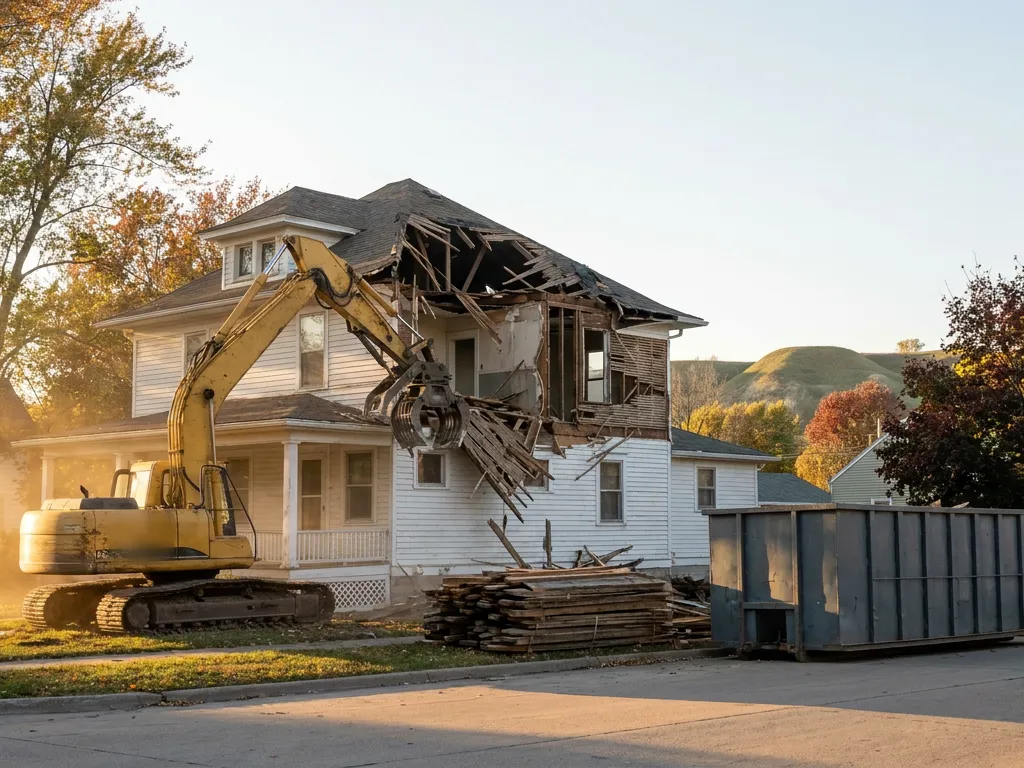
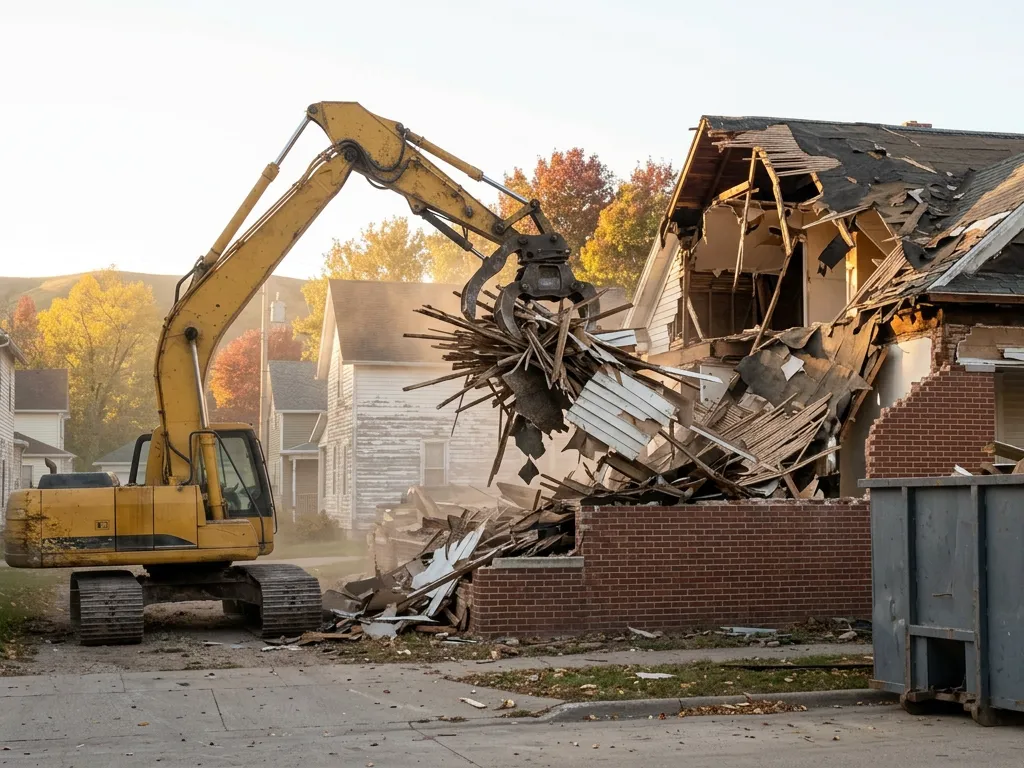
The crew arrives with a tracked excavator, usually fitted with a grapple, and a container or trucks. The house comes down from the top, and the debris is sorted as it is loaded: wood and mixed debris in one stream, clean concrete and metal in others. Expect noise and dust; many crews wet the work to keep dust down. Neighbours appreciate a word beforehand.
On a typical house the demolition itself takes two to five days in HomeGuide's figures: a day or so to bring the structure down and sort it, a day or two of hauling, and the basement work. A garage or shed on the same lot usually comes down in the same visit.
The haul and the basement
Loads leave for the landfill across the river at Jackson, Nebraska, or for recyclers, since the city's own drop-off does not take contractor debris. Then the basement walls are broken or collapsed, the floor is broken so it drains, and the hole is filled in compacted layers.
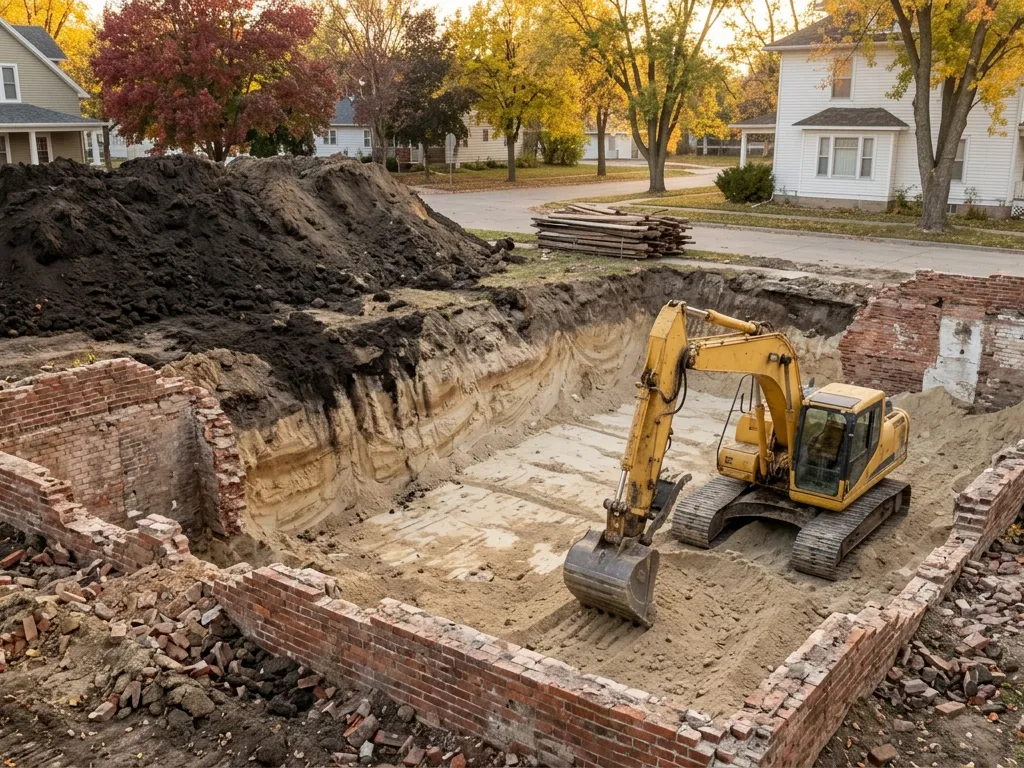
If the basement walls are brick or rubble, as they are under many older Sioux City houses, they are pushed in below grade or removed, and the floor is broken so water can drain through it. Moving more than 50 cubic yards of fill needs a grading permit, which most house basements exceed.
Want to know where your debris will go? (712) 543-5529
The finished lot
The last step is the grade: topsoil, a slight crown to shed water, and seed or another ground cover within 30 days, or by April 1 if the work finished after October 1. If a new house is coming, the fill is placed for it, or the hole is left ready for the new foundation. The house demolition page covers the job in more detail, and the service area page lists the towns served.
Before the crew arrives, what the owner does
Most of the owner's work happens in the week before demolition. Take out anything you want to keep, including fixtures and salvage you plan to sell; anything left becomes debris. Make sure the utility disconnects are confirmed, not just requested, because the crew cannot start until they are done. Move vehicles off the street in front of the house, and tell the neighbours the date, especially those who share a driveway or an alley.
If the house is in one of Sioux City's historic districts, the certificate of appropriateness has to be in hand before the permit issues. If the city has posted a notice on the property, keep a copy with you on the day.
The paperwork to keep afterwards
When the lot is finished, keep a file: the demolition permit, the written price and final invoice, the asbestos survey and DNR notice if the job needed them, and any grading permit. A buyer or lender for the lot, or the builder of a new house, may ask how the old foundation was removed and how the fill was placed, and the file answers that.
For what each step costs, see the Sioux City demolition cost guide.
Sources
Frequently asked questions
Demolition day, answered
Do I need to be there on demolition day?
Not usually, once the scope is agreed in writing and the utilities are confirmed off. Many owners stop by at the start and again when the lot is graded.
What happens to the house's contents?
Anything left in the house goes out with the debris unless you remove it first. Clearing it beforehand keeps the price down and lets you keep what matters.
Will demolition damage the neighbours' property?
A careful crew brings a house down from the top and inward, away from neighbours, and wets the work to keep dust down. Tell the neighbours the date in advance.
What is left on the lot after a house is demolished?
A filled, compacted and graded lot, with topsoil and seed or another ground cover within 30 days, or a hole left ready for a new foundation if you are rebuilding.
How long does the whole process take?
The machine work is two to five days on a typical house, but with the ten working days of permit notice and the final grade, plan on several weeks from the first call to a seeded lot.
Who arranges the utility disconnects before demolition?
The owner or the contractor requests them from each utility: MidAmerican Energy for gas and electric, and the City of Sioux City for water and sewer. Demolition cannot start until they are done.
Can I keep anything from the house before it is demolished?
Yes. Remove fixtures, doors, trim or anything else you want before demolition day. Anything left in the house goes out with the debris.